
Kelly Anderson, PhD
Almost all of us have had a day when we’re on top of everything, we’re firing on all cylinders, and feel unstoppable, only to be followed by a day when we feel like we’re going to lose it if we receive just one more email. It may seem like these fluctuations come out of the blue, which can feel as confusing as it is overwhelming. However, you may be asking yourself to perform outside your window of tolerance. When we ask ourselves to continue to perfom, even when we are outside our window of tolerance, it can set us up for feelings of overwhelm and even an inability to cope.
What is The Window of Tolerance?
Your window of tolerance is your optimal zone of physiological arousal for performance, stress management, and emotional coping. When people are within their window, they tend to feel calm, safe, emotionally regulated, and present-focused. When outside of their window, folks tend to go in one of two directions: into hyperarousal (stress, anxiety, overwhelm) or hypoaroussal (shut down, dissociated). Hyperarousal is the too-much end. Your sympathetic nervous system (your fight or flight) has flooded your body with stress, and you’re likely to feel reactive and on edge, where even small things feel like threats. Hypoarousal is the too-little end. Your system hits the brakes hard, and you may feel numb, foggy, or disconnected from everything around you.
In-the-Moment Tools for Each Zone
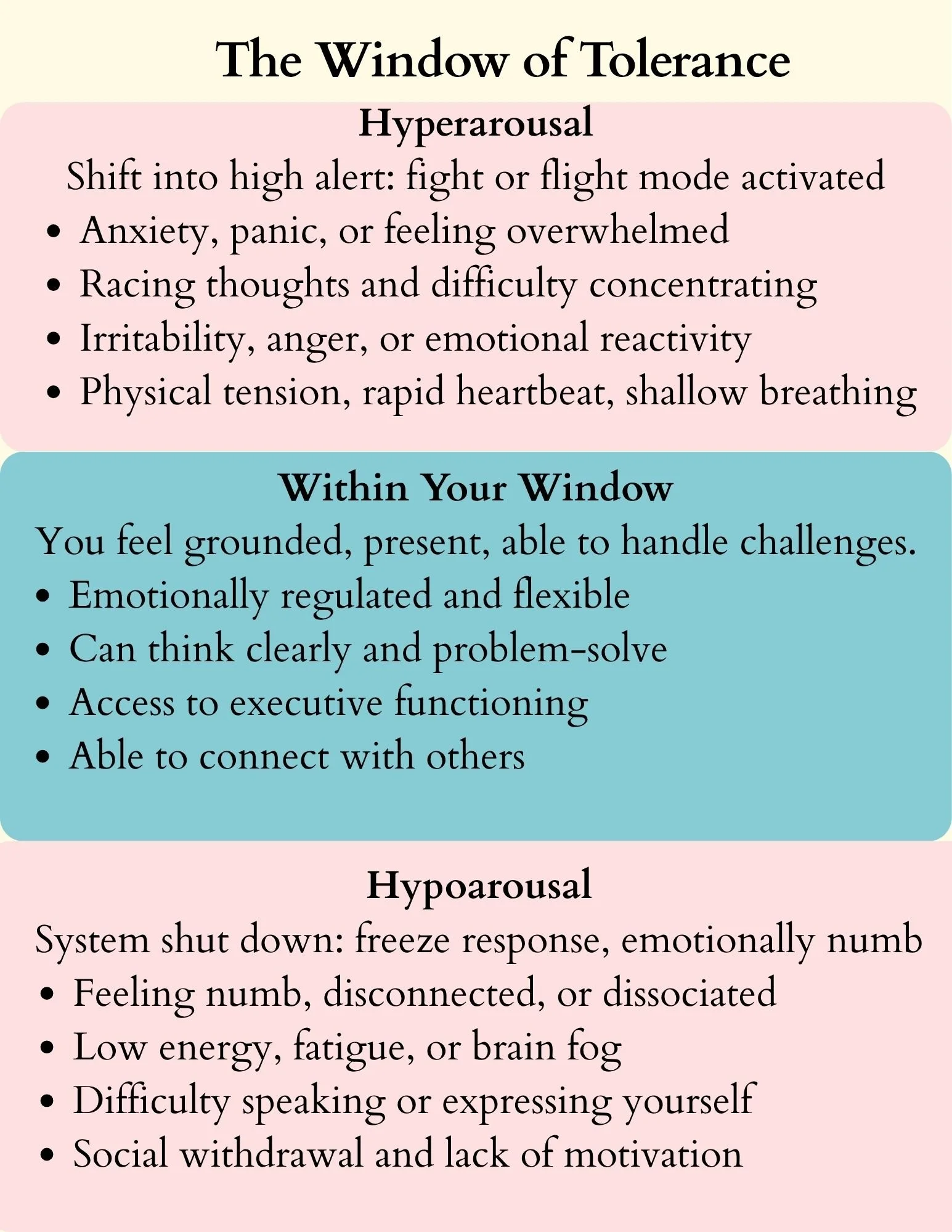
The tool you may need to get back into your window of tolerance depends on which direction you've tipped. Because your brain and body are responding in different ways based on being in hyper- or hypoarousal, checking in on what you’re experiencing before taking action can be helpful.
What to Do When You're Hyperaroused
Warning signs: racing thoughts, irritability that feels disproportionate, chest tightness, talking faster than usual, emotional flooding, hypervigilance.
The physiological sigh. Double inhale through your nose, short first breath then a quick top-up, followed by a long slow exhale through your mouth. Researchers have found this specific pattern is the fastest way to regulate your sympathetic nervous system in real time. Try one or two rounds to start.
Cold water. Running cold water over your wrists or splashing it on your face triggers the dive reflex, a built-in response that slows your heart rate quickly, which can signal calm to your brain.
Grounding. Slowly scan the room and name five things you can see. Actually slow your gaze down. This activates the social engagement branch of your nervous system and signals that your current environment is safe, which interrupts the threat-scanning loop that keeps you activated. If you can name those things aloud while pointing to them, this may be even more effective.
Extended exhale breathing. Inhale for four counts, hold for a moment, and exhale for six to eight counts. The longer your exhale relative to your inhale, the more your system downshifts, bringing more calming feelings faster.
What to Do When You're Hypoaroused
Warning Signs: brain fog, emotional numbness, fatigue that sleep doesn't fix, difficulty making small decisions, a strange sense of disconnection from your own body.
Movement before talking. If you feel numb and foggy before a hard conversation, walk around for a few minutes first. Swing your arms, bounce on your toes, march in place. This can help bring your nervous system back online, becuase movement is one of the most direct routes there.
Humming or vocalization. The vagus nerve runs through our vocal cords, so humming, singing, or even sustained "vmmm" sound stimulates it directly and increases arousal in a gentle way. Vocalization is one of the fastest ways to move out of shutdown.
Sensory anchoring. You can use strong smells (perfume, essential oils), tastes (spicy pepper, sour candy), temperature changes (hot shower, stepping into the cool evening air, holding an ice cube), or holding a textured object in your hands (a fidget, a childrens/dog toy, a soft piece of material). You can use anything that gives your senses something present to anchor to. You're trying to come back into your body before you try to do anything else, and your five senses help to ground you.
Widening Your Window Over Time
The tools above are real, and they work. But they're regulation in the moment. They don't expand your baseline window capacity. That takes something different, and it's worth being specific about what the research actually says.
Co-regulation with safe people: Your nervous system learns regulation through relationship, not willpower. Cues from other people that indicate you’re safe, like a calm voice, relaxed facial expressions, and calm behavior, can help you regulate as well. This is why consistent therapy works, and why chronically unsafe or unpredictable relationships keep the window narrow.
Adequate Sleep: Even one night of poor sleep significantly increases reactivity in the part of your brain that controls your threat response. Chronic sleep deprivation keeps your nervous system in a low-grade state of hyperarousal. You can't meditate your way out of a sleep debt, and learning healthy sleep hygiene is necessary.
Consistent movement: Regular movement, particularly aerobic exercise, increases your body's ability to shift between activation and rest. Moderate movement on a regular basis improves the part of your brain that helps you regulate emotions, that is, stay in your window of tolerance, even when things are hard.
Processing old stress: Unprocessed trauma and chronic stress narrow your window. Managing symptoms related to trauma and stress daily helps to allow more bandwidth and tolerance. Taking the time to directly address and work through any underlying trauma can significantly increase your tolerance.
Social safety as an ongoing practice - Research shows that regular experiences of safety, moments where your nervous system registers that you're genuinely not in danger, gradually expand window capacity over time. That can look like a consistent routine, a relationship where conflict gets repaired, a community where you feel genuinely seen, or even a pet.
Increasing your window of tolerance takes time and consistency. This is often why many people work to obtain these skills in therapy, where they have support and accountability to help keep skill development on track.